
What Makes a Painting Collectible?
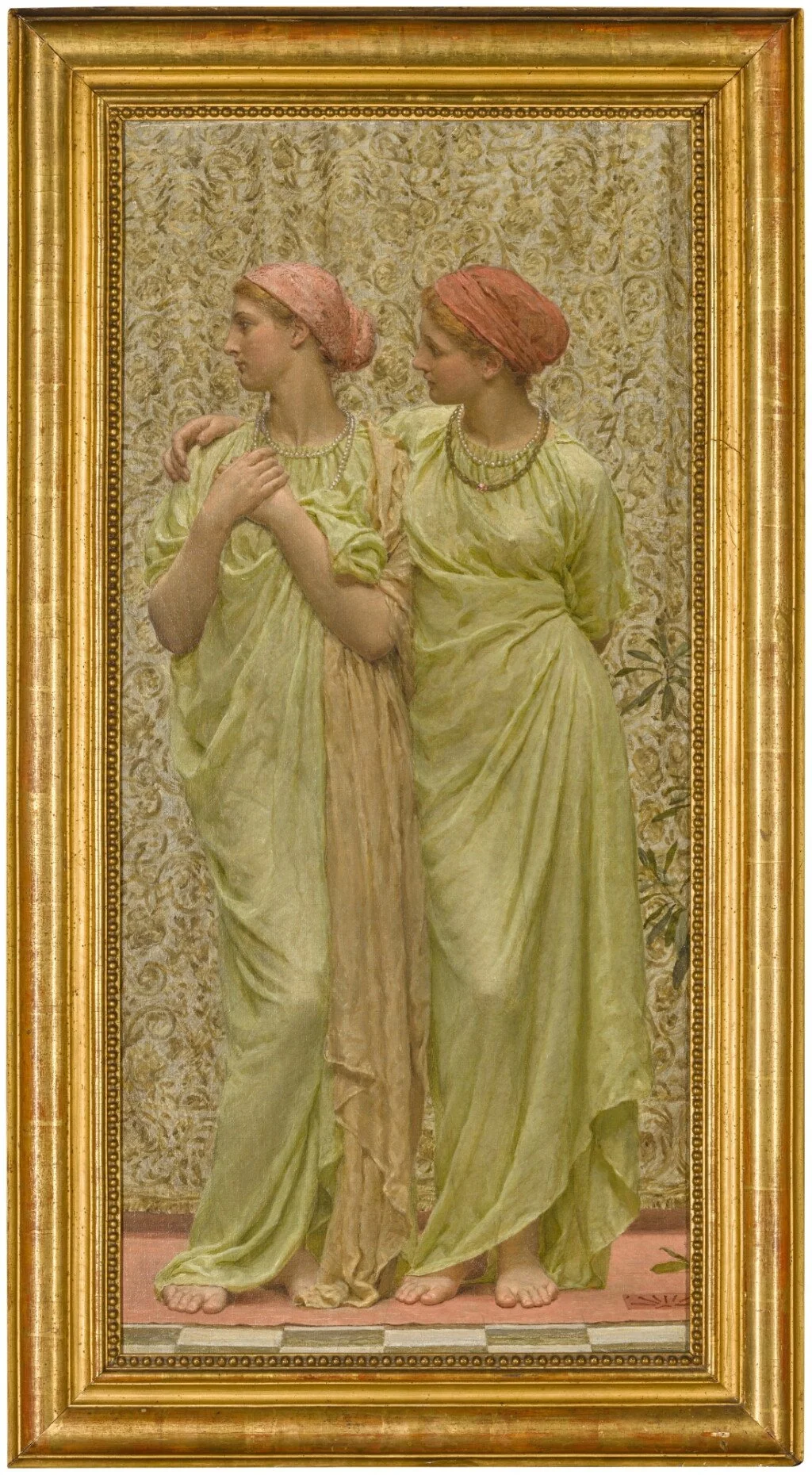
Albert Joseph Moore, A.R.W.S. York 1841–1893 London
In the world of antique paintings, age alone is rarely enough to establish importance. A work may have survived for centuries without becoming particularly desirable, while another, created within the same period, may hold considerable historical, artistic, and cultural significance.
For the discerning collector, the question is not simply whether a painting is beautiful, but what makes it worth preserving, studying, and adding to a collection. Understanding this distinction requires looking beyond the surface.
01. Attribution: Understanding the Hand Behind the Work
One of the first considerations in assessing an antique painting is its attribution: the identification of the artist responsible for the work. A painting may be attributed to a named artist, associated with their workshop, assigned to their circle, or described as being in their style. These distinctions are significant. They reflect different levels of certainty about authorship and can have a substantial influence on a work’s historical interpretation and market value. Attribution is rarely established through visual impression alone. Art historians and specialists examine technique, composition, materials, stylistic comparisons, documentary evidence, and, where appropriate, scientific analysis. A painting associated with a recognised master may still be an important historical object even when the artist's direct authorship cannot be confirmed. For the informed collector, understanding precisely what is being offered is essential. The distinction between an original work, a workshop production, and a later copy is not merely terminological. It determines how a painting should be understood within the history of art.
02. Provenance: The History of Ownership
Provenance refers to the documented history of a work’s ownership. In the antique market, it can provide valuable evidence of a painting’s identity, historical circulation, and relationship to earlier collections. An established provenance may connect a work to a notable collector, an aristocratic household, a historic collection, or a documented sale. Such associations can contribute to its cultural significance and desirability. However, provenance should be examined critically. A distinguished previous owner does not automatically establish artistic quality, just as incomplete documentation does not necessarily invalidate a painting. The strength of the evidence matters. Historical inventories, exhibition catalogues, archival records, correspondence, labels, and auction documentation may all contribute to a more complete understanding of a work. Equally important are questions of lawful ownership and title. Due diligence should address potential gaps in ownership history, restitution concerns, and applicable cultural property regulations. For the serious collector, provenance is not simply a prestigious name attached to an object. It is part of the evidence through which the object's history can be understood.
03. Condition: What Time Has Left Behind
The condition of an antique painting must be assessed in relation to its age, materials, history, and previous interventions. Paintings are vulnerable to changes in temperature and humidity, environmental exposure, structural movement, and the natural ageing of their constituent materials. Over time, they may undergo relining, cleaning, retouching, varnish replacement, or more extensive restoration. Not all restoration is detrimental. Carefully executed conservation can stabilise a work and improve its legibility while respecting its original material. Conversely, excessive cleaning, extensive overpainting, structural damage, or poorly documented interventions may compromise its integrity. A professional condition assessment considers the stability of the support, the condition of the paint layer, losses, cracks, previous restorations, and the extent to which the original surface remains intact. For collectors, the objective is not necessarily to find a painting untouched by time. It is to understand what survives, what has changed, and whether the present condition is consistent with the work's artistic and historical importance. A detailed condition report, supported by specialist examination where necessary, should form part of the acquisition process.
04. Rarity and Historical Significance
Rarity is often associated with collectibility, but scarcity alone does not guarantee importance. A painting may be rare because few examples by an artist survive, because it represents an unusual subject, or because it belongs to a significant phase in an artist's development. It may also offer insight into a particular workshop, regional school, patronage tradition, or historical moment. The significance of a work depends on how it contributes to a broader understanding of art history. An exceptional portrait may reveal the conventions of status and representation in a particular period. A religious composition may illuminate devotional practices, workshop traditions, or the relationship between artist and patron. A landscape may document the development of a regional school or a changing approach to the natural world. Such qualities can make a painting valuable to scholars, institutions, and private collectors alike. The most compelling acquisitions are often those in which rarity is accompanied by a clear artistic or historical rationale.
05. Quality Beyond the Signature
A recognised signature can attract attention, but it should never replace a considered assessment of the painting itself. Composition, drawing, handling of paint, colour, execution, and the relationship between individual elements all contribute to artistic quality. Within the same artist's body of work, certain paintings may be more accomplished, ambitious, or historically important than others. The distinction is particularly relevant in the antique market, where workshop production and collaborative practices were common in many periods. A work of considerable quality may warrant attention even when its authorship remains uncertain. Equally, a painting bearing a famous name requires proper examination before its attribution can be accepted. The collector's task is to evaluate the work as an object of art and history, rather than allowing a signature or reputation to determine the entire judgement.
06. Market Value and Collectibility
Artistic significance and commercial value are related, but they are not interchangeable. The market for antique paintings is influenced by attribution, condition, provenance, subject matter, period, rarity, quality, and the current demand for particular artists or schools. Comparable auction results can offer useful evidence, provided that differences in attribution, condition, date, and sale circumstances are taken into account. A painting's estimate or asking price should therefore be considered within its specific context. A high valuation does not independently establish quality, and a comparatively modest price does not necessarily indicate a lack of artistic merit. Collectors should also consider the total cost of acquisition, including buyer's premiums, applicable taxes, conservation, framing, insurance, and future transport or storage requirements. For those approaching a purchase as a long-term investment, it is important to recognise that the art market can be unpredictable. Liquidity varies considerably, transaction costs can be substantial, and future appreciation cannot be guaranteed. A well-considered acquisition begins with understanding the object itself, not with an assumption about its future price.
07. Building a Collection with Intention
Collecting antique paintings is most rewarding when individual acquisitions contribute to a coherent and considered whole. Some collectors focus on a particular period, school, artist, or subject. Others build collections around personal interests, regional histories, material qualities, or the relationship between paintings and their interiors. There is no single correct approach. What matters is the development of an informed point of view. Research, consultation with qualified specialists, careful examination, and patience all play an important role. Auction catalogues, scholarly publications, museum collections, archival resources, and condition reports can help establish the context in which a work should be understood. Above all, collectors should distinguish between what is known, what is probable, and what remains uncertain. In the antique market, a transparent account of a painting's attribution, condition, and provenance is more useful than an overstated claim. A collection built on this foundation becomes more than an accumulation of objects. It reflects a considered relationship with art history and a commitment to preserving works of cultural significance.
Beyond the Acquisition
What, then, makes a painting collectible? It is rarely one quality in isolation. The strongest works bring together artistic merit, historical relevance, credible attribution, sound documentation, and a condition appropriate to their age and significance. Some paintings command attention because of their authorship. Others because of their historical associations, rarity, or exceptional execution. Occasionally, a work is compelling precisely because it offers a new perspective on a familiar period or challenges an established understanding of an artist. The role of the collector is to recognise these distinctions and approach each acquisition with curiosity, discipline, and care. Ultimately, collecting antique paintings is not simply about possessing a fragment of the past. It is about understanding why that fragment matters, what it can tell us, and how its significance might be preserved for the future.